
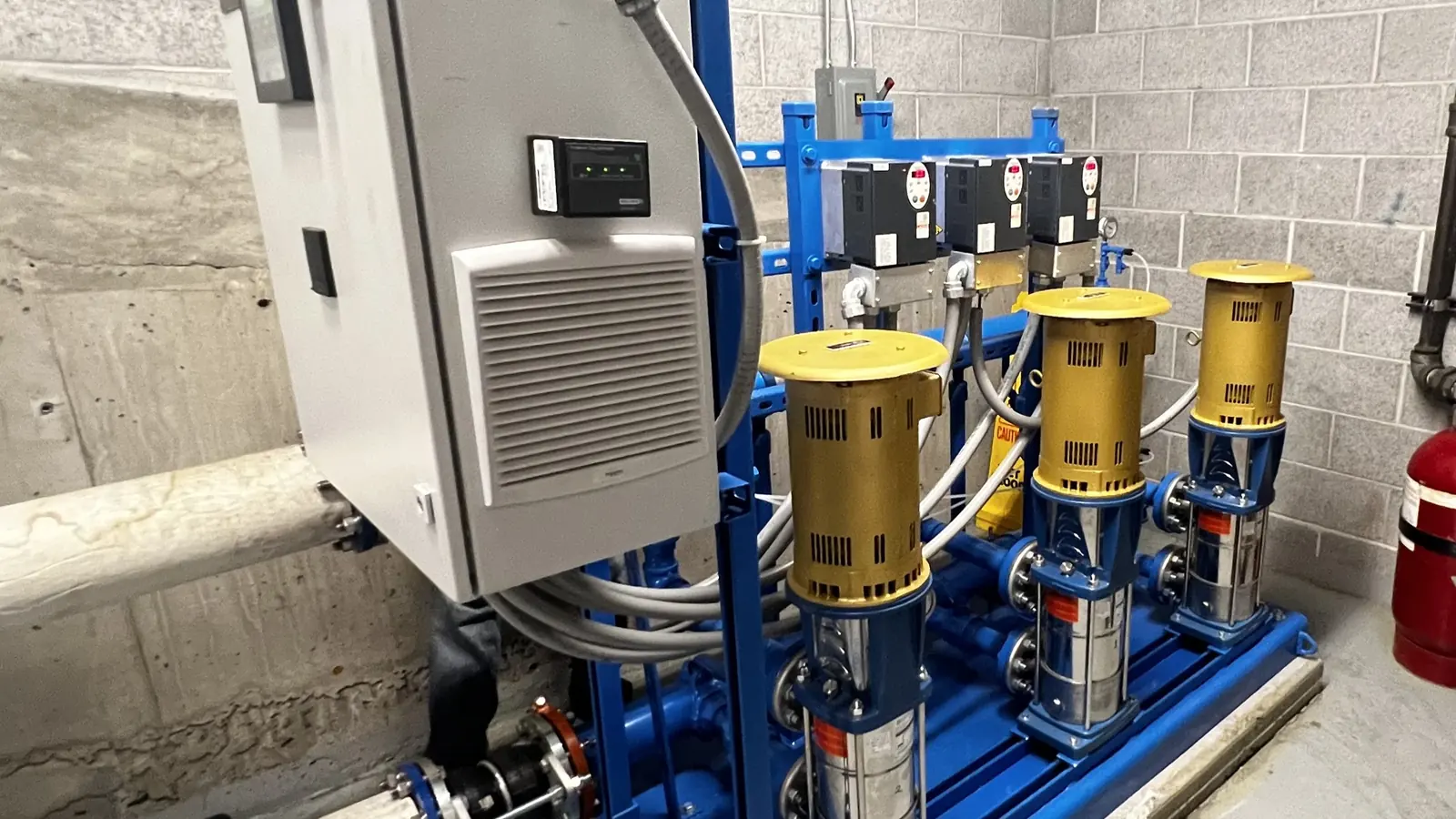
A domestic-water booster system raises incoming water pressure to serve a building's plumbing demand. The appropriate arrangement depends on available supply pressure, building elevation, demand patterns, and the pressure required at the points of use.
How the System Works
Booster packages may use one or more pumps, pressure sensors, controls, and a pressure tank where the design calls for one. Controls start, stop, stage, or vary pump speed as demand changes. These components need to work together across the building's operating range.
Consistent pressure depends on more than pump size. Restricted piping, inaccurate pressure signals, check-valve problems, or an unsuitable control sequence can affect the performance of an otherwise serviceable pump.
Choosing a Booster-System Approach
- Establish the demand. Identify normal and peak use, building elevation, and the required delivery pressure.
- Review the supply. Record available incoming pressure and any known supply limitations or changes.
- Consider the operating range. Review low-demand behavior, pump staging, and the need for variable-speed control.
- Plan for service. Consider equipment access, isolation, maintenance, and the consequences of a pump being unavailable.
Variable-speed control can be useful where demand changes, but energy performance depends on the equipment, controls, and actual operating conditions. A system assessment should support any savings estimate.
Symptoms Worth Investigating
- Low pressure at particular floors or during peak demand
- Pressure that rises and falls repeatedly
- Frequent starts, stops, or rapid changes in commanded pump speed
- A pump that runs without restoring expected pressure
- New leakage, vibration, noise, or control alarms
Record when the problem occurs and which pumps are running. Qualified personnel can assess pump condition, controls, and the operating requirements of your system.
Discuss Your System with RMS
Service support: Contact RMS to discuss operating symptoms, maintenance needs, and service availability.
Share the building’s demand, available supply pressure, target pressure, and project scope with RMS to discuss an appropriate booster-system approach.