
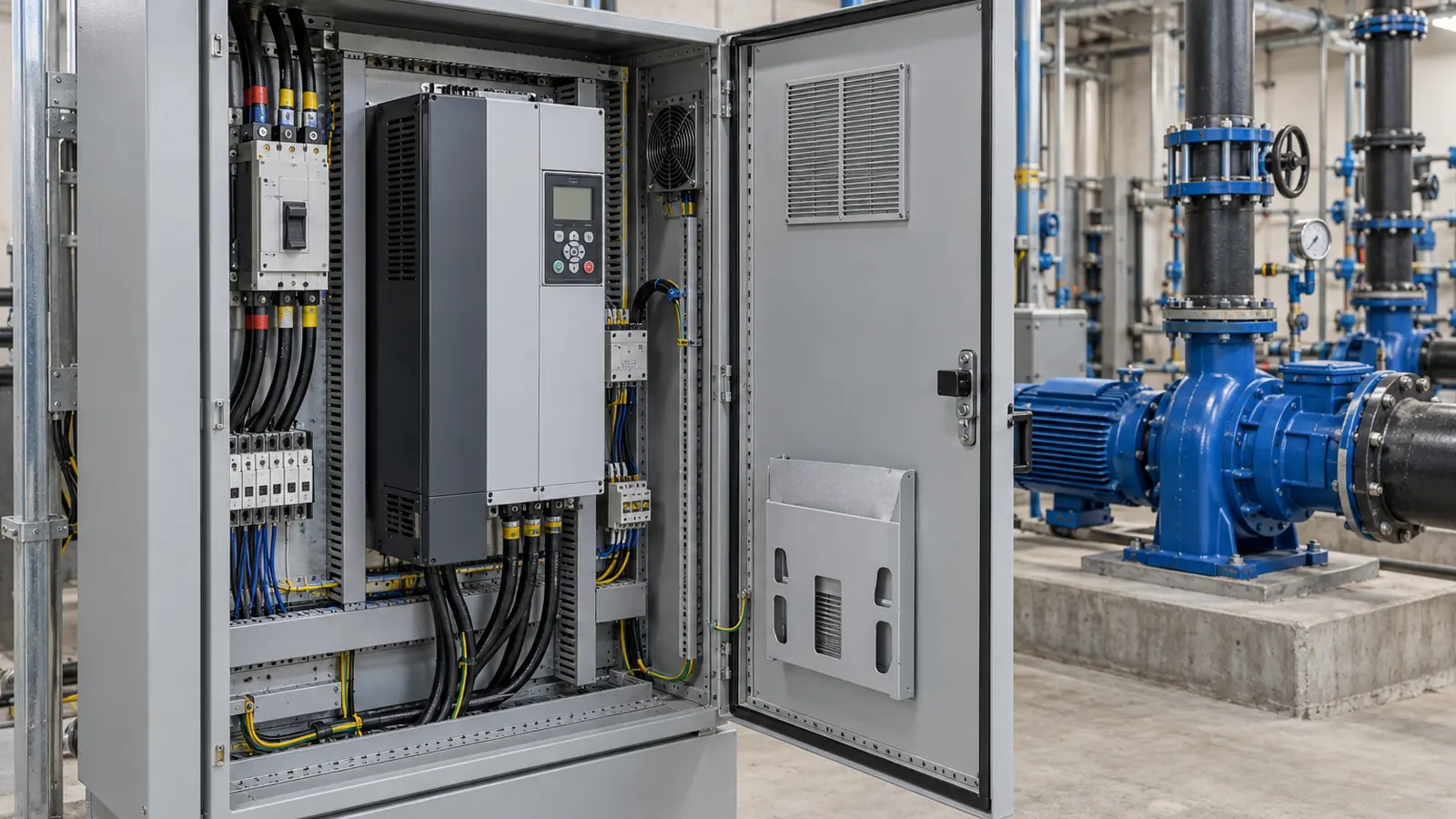
A variable frequency drive, or VFD, adjusts the electrical supply to a compatible motor to control its speed. In a pump system, variable-speed operation can help match pump output to changing demand when the equipment and controls are selected for the application.
What Changes with Variable-Speed Control?
Energy use: Variable-speed control can reduce energy use where pump speed can be matched to changing demand. The potential benefit depends on the system curve, operating range, controls, and duty cycle.
Speed control can also support pressure or flow regulation. Suitable starting and stopping settings may reduce abrupt changes, but those settings must account for the pump, motor, piping, and process requirements. A VFD does not correct a blocked line, inaccurate sensor, worn pump, or poorly matched system by itself.
Common Applications
- Domestic-water booster systems with changing demand
- Heating and cooling circulation systems
- Water and wastewater pumping applications suited to variable-speed operation
- Industrial processes requiring controlled flow or pressure
These examples are starting points for an equipment-specific review. Specialized systems require their own design and control assessment.
Before Selecting or Changing a Drive
- Review the duty. Identify required flow, pressure, operating hours, and expected changes in demand.
- Check compatibility. Review motor ratings, pump operating limits, electrical supply, and the manufacturer's requirements.
- Define the controls. Establish the pressure or flow signal, operating sequence, and interaction with other pumps.
- Consider the installation. Review the drive's environment, enclosure, cooling, and service access.
- Plan verification. Define the measurements and observations needed to assess operation after the work.
Troubleshooting an Existing System
Repeated speed changes, unstable pressure, nuisance trips, or unexpected staging can have several causes. Useful records include the drive model, alarm history, speed command, pressure or flow readings, and recent changes to the system.
Drive cabinets can contain hazardous electrical energy after the motor stops. Inspection, setting changes, and electrical work belong with qualified personnel following equipment instructions and the site's energy-control procedures.
RMS can review controls behavior alongside pump condition and hydraulic symptoms to help define a service or retrofit scope.