
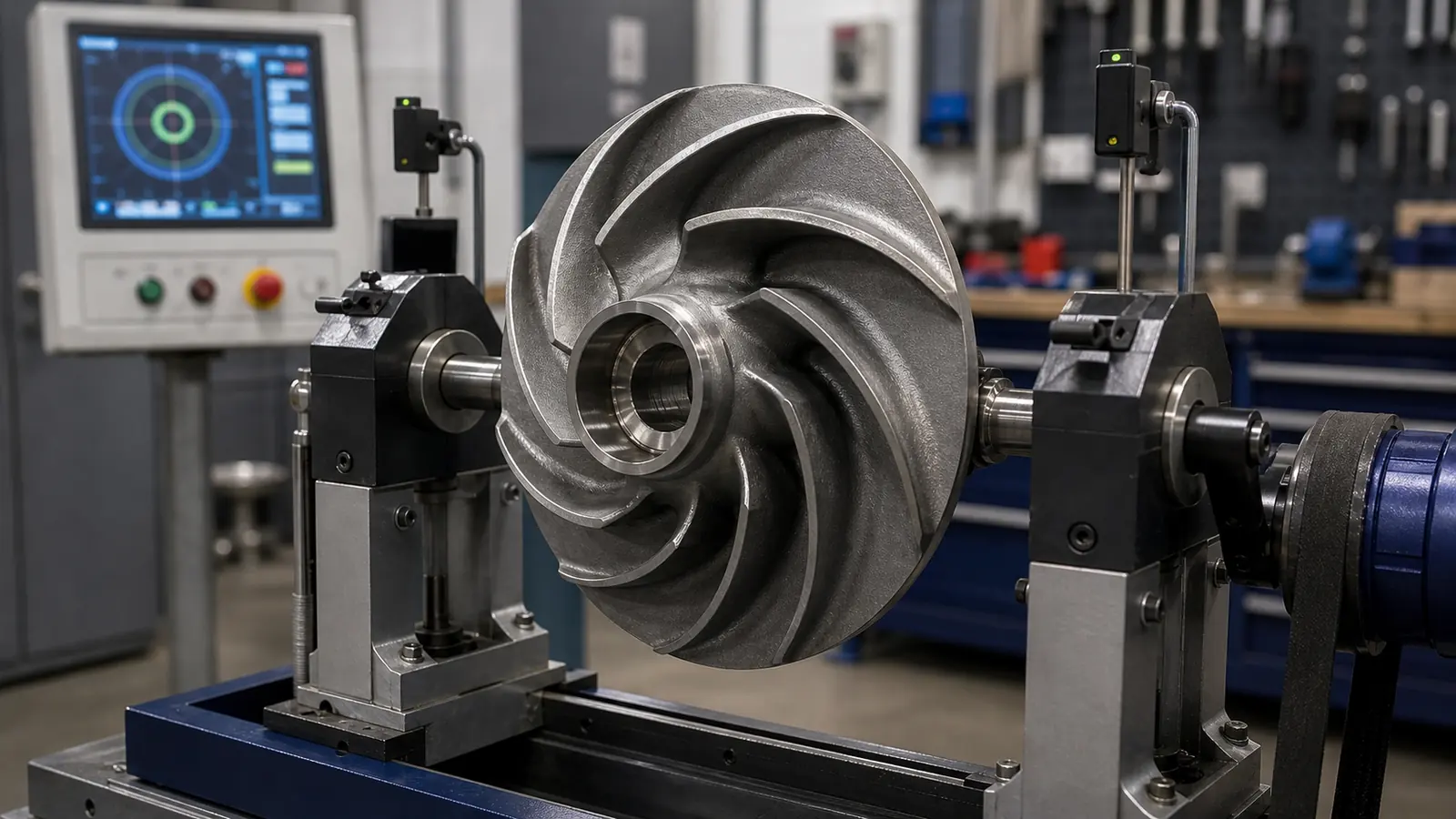
Uneven mass distribution in a rotating component can contribute to vibration. Balancing addresses that source of vibration, but a pump's operating condition also depends on alignment, bearings, mounting, wear, and hydraulic behavior.
Static and Dynamic Balancing
Static balancing considers the distribution of mass about the rotational axis. Dynamic balancing evaluates the rotating component so corrections can address the imbalance present during rotation. The appropriate method and acceptance criteria depend on the component, equipment design, and service requirements.
A description such as low speed or high speed is not enough to select a balancing method. Equipment instructions, component condition, and the required tolerances should guide the work.
Investigate the Vibration Before Choosing the Repair
Vibration can have more than one cause. An assessment may include:
- The operating conditions when vibration occurs
- Available measurements and changes from an established baseline
- Impeller condition, deposits, damage, or recent repair work
- Shaft, bearing, coupling, mounting, and alignment condition
- Flow, pressure, or suction conditions that may affect operation
The findings help determine whether balancing is appropriate or whether another fault needs attention first. Removing equipment or working on rotating components should be performed by qualified personnel using the site's isolation and safe-handling procedures.
Verify and Record the Result
The service scope should define the applicable equipment requirements and the checks needed after repair or reassembly. Recording the work and subsequent operating observations gives the maintenance team a useful comparison for future inspections.
RMS can discuss balancing, alignment, and vibration concerns alongside pump condition and operating requirements. Share the equipment details, symptoms, and available measurements to help define the service scope.