
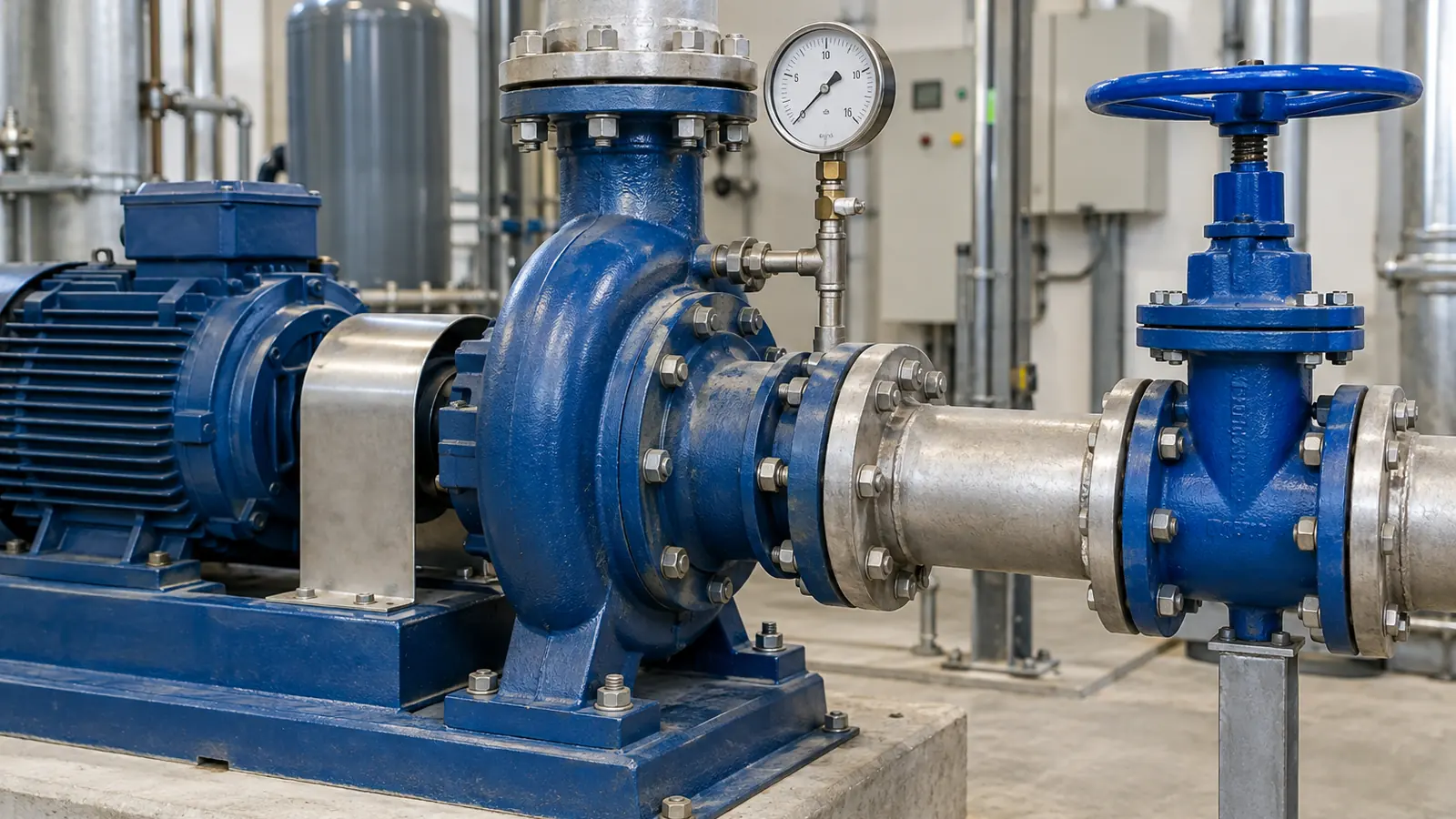
A centrifugal pump is dead-headed when it runs with little or no discharge flow. A closed discharge valve, a check valve that does not open, a blocked line, or control sequencing can leave the pump running without delivering useful flow. The pump may still develop pressure, so a pressure reading alone does not establish that water is moving through the system.
Why No-Flow Operation Matters
At very low or zero flow, energy transferred to the liquid remains in the pump instead of being carried away by normal circulation. Liquid temperature can rise, and continued operation can lead to vapor formation, vibration, seal damage, or other pump damage. The allowable time at shutoff and the required minimum flow depend on the pump, liquid, and manufacturer's operating limits.
What to Check
- Compare the run command with actual flow indication and suction and discharge pressure.
- Check the discharge-valve position, check-valve operation, and any automatic valve timing.
- Review the pump curve and controls sequence to distinguish a brief startup condition from a sustained no-flow event.
- Look for temperature, vibration, seal-leakage, or repeated trip history following the event.
Responding Safely
Follow the site's operating procedure and stop a pump that is suspected of sustained no-flow operation if authorized to do so. Do not repeatedly restart it to see whether the condition clears. A stopped pump or connected piping can still contain hot liquid and stored pressure. Before inspection or maintenance that exposes equipment or piping, qualified personnel should isolate energy, lock out the equipment, relieve stored pressure by the approved method, and verify isolation. Do not open a valve or break a connection solely because the motor has stopped.
Preventing a Repeat Event
Confirm the cause before returning the pump to service. Depending on the system, corrective work may involve a valve or check-valve repair, a sequencing change, a minimum-flow path, or a no-flow alarm and shutdown. The protection strategy should be checked against the pump manufacturer's limits and the actual operating range rather than selected from a generic checklist.
RMS Pump can review the pump, controls, valves, and operating observations together when a no-flow event is recurring or its cause is unclear. Share the equipment model, pump curve if available, pressure and flow readings, valve positions, alarm history, and recent changes when requesting service.