
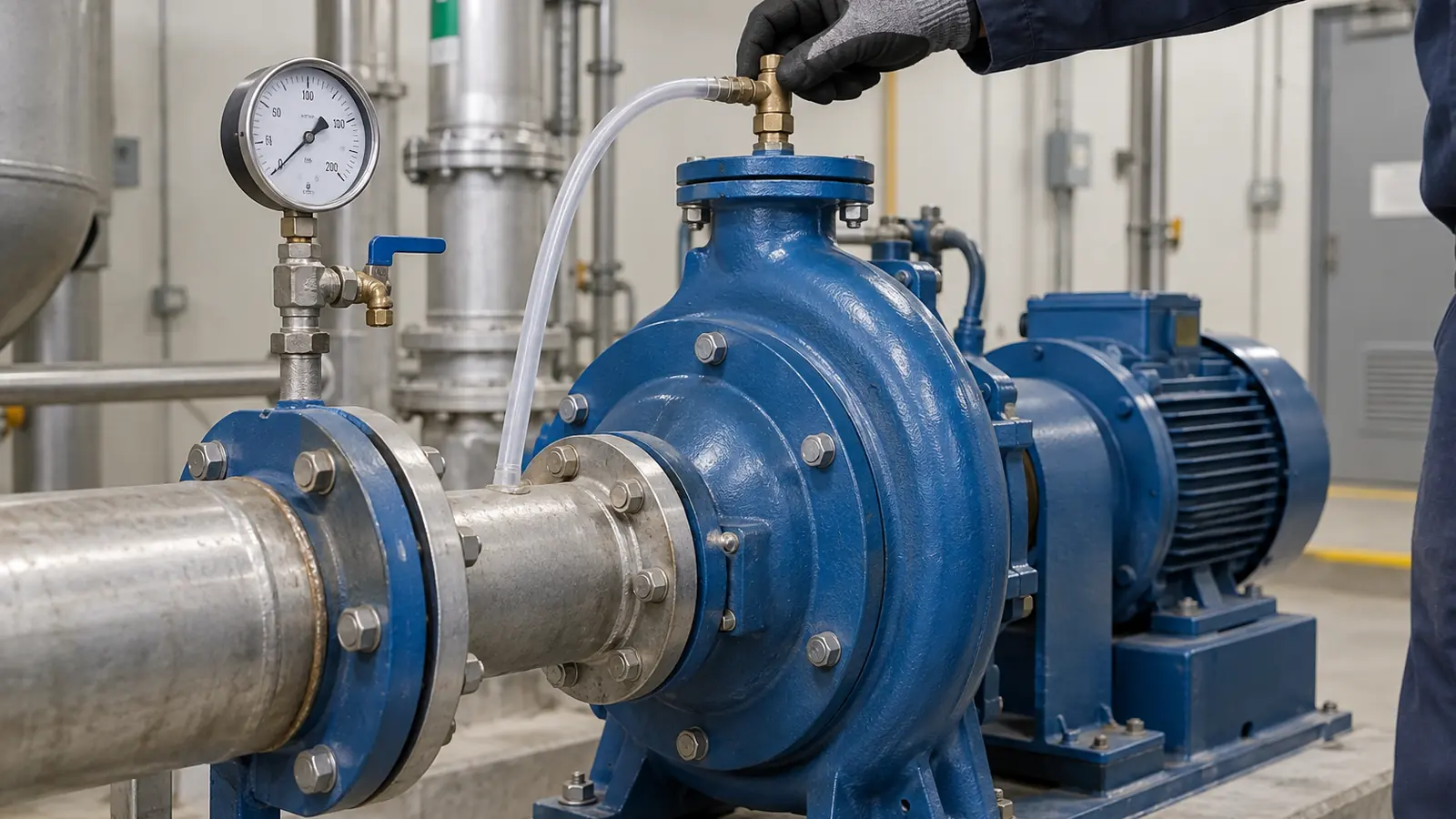
Priming establishes the liquid-filled condition a pump needs before operation. The requirements vary with pump design and installation. A loss of prime or trapped air can prevent a pump from delivering the expected flow and can lead to damaging operating conditions.
Signs of a Priming Problem
- The pump runs but delivers little or no flow
- Pressure fails to reach its expected operating range
- Flow becomes intermittent after a shutdown or change in supply level
- New noise, vibration, or repeated trips accompany reduced performance
These symptoms do not identify the cause on their own. Suction-side air entry, an inadequate liquid supply, valve problems, restrictions, or other equipment faults may need investigation.
Equipment-Specific Priming and Safety
Priming requirements depend on the pump design, installation, and liquid. Use the manufacturer’s instructions and the site’s approved safety procedures. Opening plugs or vents, adjusting piping, or returning equipment to service should be handled by qualified personnel after the equipment and stored pressure have been made safe. If a pump repeatedly loses prime, report the symptoms and operating conditions so the cause can be investigated.
Do not repeatedly restart a pump that is not establishing flow. Follow the site's approved response procedure and the manufacturer's operating limits. A stopped motor does not establish that connected equipment is isolated or free of pressure.
Useful Information for a Service Request
- Identify the equipment. Record the pump model and the liquid being handled.
- Describe the pattern. Note whether the problem began after a shutdown, maintenance, or a change in supply level.
- Share available observations. Provide existing pressure and flow readings, alarm history, and visible symptoms without opening or disturbing equipment.
- Include recent changes. Note piping, valve, control, or operating changes that may help the service team investigate.
RMS can discuss recurring loss of prime alongside the pump's installation and operating conditions. The aim is to identify the cause and define the appropriate corrective work.