
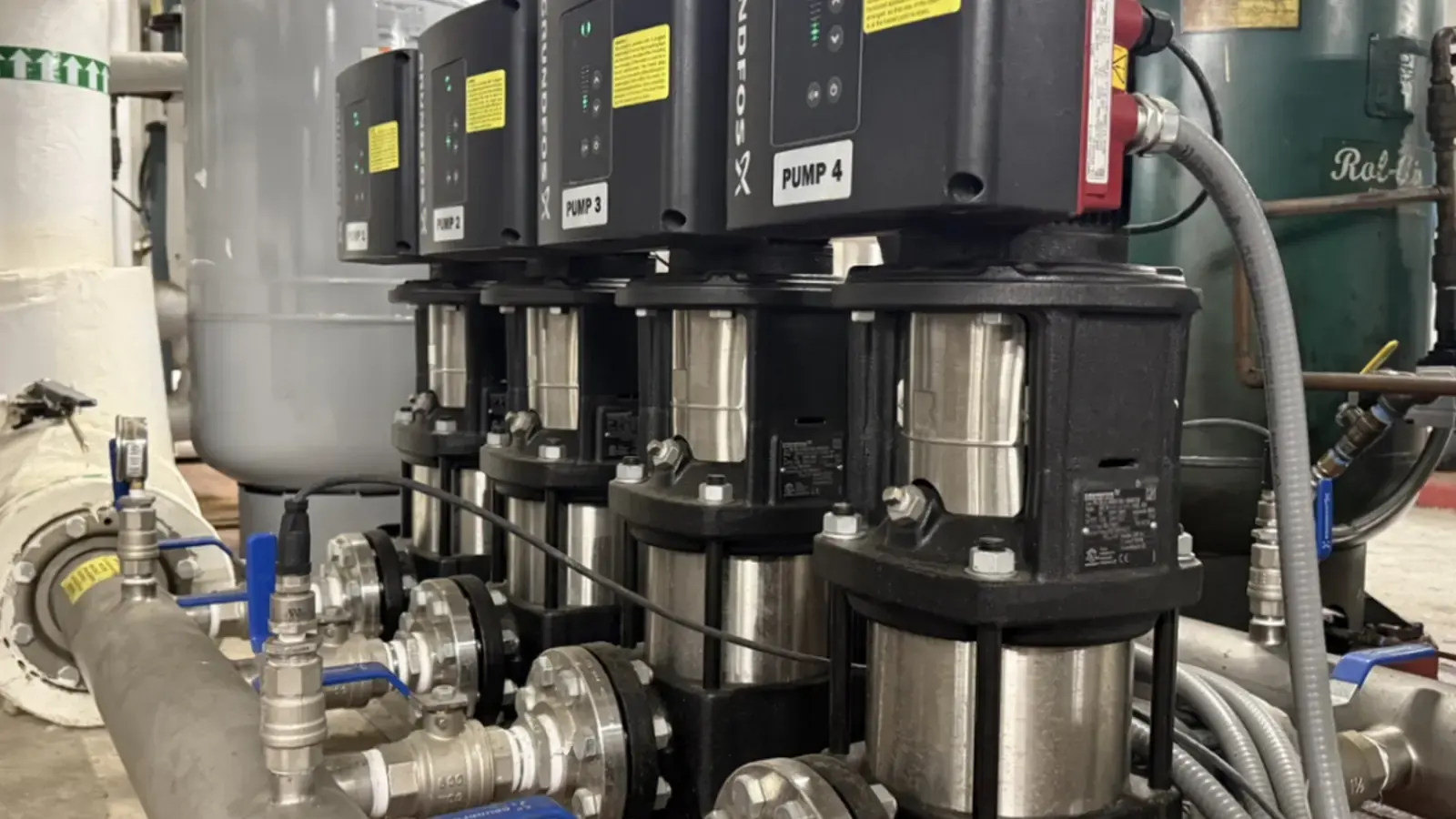
A booster package is more than a set of pumps on a skid. The pumps, suction supply, pressure sensor, control sequence, tank, valves, and building distribution system have to work together from low overnight demand through the highest credible draw. Engineering that complete operating range reduces the chance of pressure swings, short cycling, and a package that cannot deliver its stated duty.
Start at the point of use
The required pressure should be established where it matters in the building or distribution network. Work backward through elevation and piping losses to determine the pressure the booster must add. Record the available suction pressure at both typical and unfavorable supply conditions. A discharge setpoint alone does not describe the full duty.
The demand profile should separate low, normal, and peak flow. It should also identify unusual demands, such as simultaneous process loads or a critical area that cannot tolerate a pressure dip. An oversized single pump may satisfy the peak number yet operate poorly for most of the day.
Select pumps for the range, not one point
Overlay the system curve and candidate pump curves for the expected operating modes. For a multi-pump package, review the composite behavior when pumps run in parallel and the transition between one-pump and multi-pump operation. Confirm motor power and the manufacturer's operating limits at the low and high ends of the range.
Variable speed can help a booster match changing demand, but minimum speed, minimum flow, sleep behavior, and high-speed limits still need definition. A VFD should not be used to conceal a poor pump selection or unstable feedback signal.
Engineer the controls with the hydraulics
Pressure sensor location, filtering, setpoint, and staging logic influence how the package behaves. A sensor too close to a turbulent discharge or in the wrong part of the distribution system can produce control hunting. Check valves and isolation valves affect reverse flow, cycling, and serviceability. Pressure tanks can help with low-demand stability, but their size and precharge must suit the actual control strategy.
Define what happens when a pump faults, a sensor fails, suction pressure falls, or the building demand exceeds one pump's capacity. A duty/standby arrangement may be appropriate for a critical service, while another project may prioritize turndown and efficiency. That decision belongs in the project requirements, not in a generic package description.
Test more than peak pressure
Commissioning should include low, normal, and high demand; staging and de-staging; pressure recovery; alarm and fault response; and a standby-pump test where one is specified. Record suction and discharge pressure, flow where available, VFD speed, motor current, and tank precharge. These readings become a baseline for future troubleshooting.
For an RFQ or initial engineering review, share the building demand profile, target pressure at the point of use, available supply pressure, piping or riser information, controls requirements, and any redundancy expectation. RMS Pump can use that context to discuss sales and engineering of a new booster system, as well as service of an existing package, throughout Oregon and Washington.